The
thirteen British colonies and Latin America had many differences. These
included slave population, government goals, and most importantly, the British
colonies were better prepared for independence than Latin America.
British
North American colonists were better prepared for independence than their Latin
American neighbors to the south because of literacy. In Latin America, ninety percent
of the population was illiterate. In Literacy
in New Spain by Joseph Esherick, Hasan Kayalı, and Eric Van Young, it is
stated that, “The literacy rate in New Spain in 1810 could not have been much
higher than 10 percent overall, with much of the literate population compressed
spatially into the cities, and socially into the upper reaches of the social
hierarchy, so that rural literacy must have been considerably lower.” The ten
percent of people that were literate in Latin America were in the higher class
who lived in the cities. Without literacy, people cannot contribute to their
government because they do not understand it. People must be educated about a
democratic republic, so that they know the regulations and how the system
works. If Latin America became independent people would not know how to govern
themselves. However, in the British colonies, more of the population was
literate. As time went on, the number of people literate in these colonies
increased. It is said in Literacy in the
13 Colonies/Early Republic by Jack Lynch, “Among white New England men,
about 60 percent of the population was literate between 1650 and 1670, a figure
that rose to 85 percent between 1758 and 1762, and to 90 percent between 1787
and 1795. In cities such as Boston, the rate had come close to 100 percent by
century’s end.” Unlike in Latin America, the people who were literate had
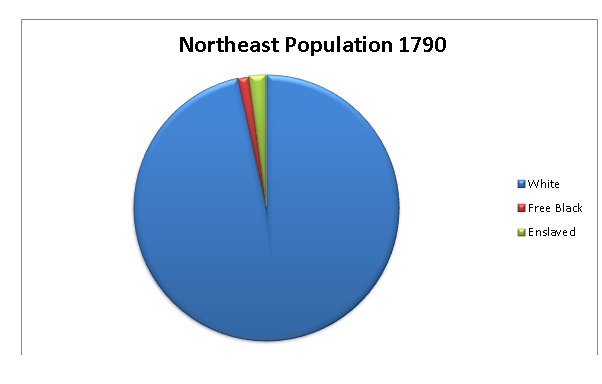
different jobs. In the colonies, the majority of the population was white. In Population in the US 1790, the pie
charts show that the Northeast population was almost completely whites, with
few enslaved and free blacks. The Southern population was about 2/3 white and
almost 1/3 of the population was enslaved, with a minor percent of the population
being free slaves. The reason why the British colonies were more literate than in
Latin America was because whites made up most of the population. Whites were
the ones who were educated in the British colonies. In the British colonies,
people understood how their government functions because most people were
literate. If they became independent, they would know exactly how to maintain
the government.

http://comparativehistoryamericanrevs.weebly.com/uploads/3/0/0/9/3009385/7022367_orig.jpg
http://comparativehistoryamericanrevs.weebly.com/uploads/3/0/0/9/3009385/7022367_orig.jpg
In
addition to literacy, British North American colonists were better prepared for
independence than their Latin American neighbors to the south because of
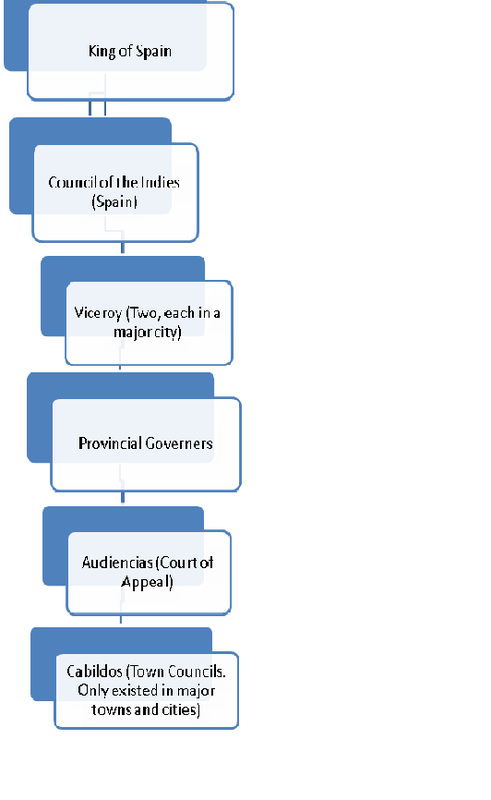
political experience. In Latin America, the top two classes were located in
Spain, not the colonies. Edward L. Ayers, Lewis L. Gould, David M. Oshinsky, and
Jean R. Soderlund write in American
Passages, “Directly below the monarch was the Council of the Indies,
located in Spain and composed of men who knew little about the New World. The
council regulated trade, appointed officials, made laws, and determined who
should be allowed to emigrate.” These top two levels determined the laws of
people living in the colonies from far away. There are many levels, but they
were all controlled by people born in Spain. People living in the colonies had
no say in their laws. In On Civil Law,
it is said, “Monarchs appointed judges to act as agents strictly accountable to
the monarch rather than local magnates; required judges to apply the written
law rather than general principles to all cases no matter how dissimilar.”
Judges in Latin America were only allowed to apply written laws. They were not
able to pass laws that fit certain situations. People had to follow their
monarchs and had no experience in self-governing in Latin America. The British
colonies however, had fewer social classes, with the royal governor (the level
underneath the king) living in the colonies. The colonies could self-govern.
Edward Eggleston writes in A History of
the United States and its People, ““The Charter of Massachusetts Bay of
1629, for example, declared that all who should settle in that colony should
“have and enjoy all liberties and Immunities of free and naturall Subjects . .
. to all Intents, [Constructions], and Purposes whatsoever, as [if] they and
[everyone] of them were borne within the Realme of England.”[25]” Since the
British colonies had experience with self-governing, they would be prepared to
govern themselves if they were to gain independence.

http://comparativehistoryamericanrevs.weebly.com/uploads/3/0/0/9/3009385/7899709_orig.jpg
The
British colonies had more literate citizens and more political experience than
Latin America. These two factors caused British North American colonists to be
better prepared for independence than their Latin American neighbors to the
south.