Thursday, December 19, 2013

Dorthea Dix in Distress Over Mental Hospitals in the 19th Century

If County Jails must be resorted to for security against the dangerous
propensities of madmen, let such use of prisonrooms and dungeons be
but temporary. It is not long since I noticed in a Newspaper, published
near the borders or this State, the following paragraph: “It is our fate,”
writes the Editor, “to be located opposite the County Jail, in which are
now confined four miserable creatures bereft of the Godlike attribute
of reason: two of them females; and our feelings are daily excited by
sounds of woe, that would harrow up the hardest soul. It is horrible
that for the sake of a few thousand dollars the wailings of the wretched
should be suffered to issue from the gloomy walls of our jails without
pity and without relief. Were our lawmakers doomed to listen for a
single hour each day to the clanking of chains, and the piercing shrieks
of these forlorn wretches, relief would surely follow, and the character
of our State would be rescued from the foul blot that now dishonors it.”
In nearly every jail in North Carolina, have the insane at different times,
and in periods varying in duration, been grievous sufferers. In Halifax
County, several years since, a maniac was confined in the jail; shut in
the dungeon, and chained there. The jail was set on fire by other
prisoners: the keeper, as he told me, heard frantic shrieks and cries of
the madman, and “might have saved him as well as not, but his noise
was a common thing he was used to it, and thought nothing out of the
way was the case.” The alarm of fire was finally spread; the jailer
hastened to the prison: it was now too late; every effort, and
no exertions were spared, to save the agonized creature, was unavailing.
He perished in agony, and amidst tortures no pen can describe.…
Dix Document.notebook
2
December 15, 2013
In illustration of the blessing and benefit of Hospital care in cases long
and most cruelly neglected, I adduce the following examples recorded by
Dr. Hill, and corresponding with many cases under my own immediate
observation since 1840. “Two patients,” writes the Dr. “were brought to
me in 1836, who had been confined in a poorhouse between eighteen
and twenty years. During this period they had not known liberty. They
had been chained day and night to their bedsteads, and kept in a state so
filthy that it was sickening to go near them. — They were usually
restrained by the straitwaistcoat, and with collars round their necks, the
collars being fastened with chains or straps to the upper part of the
bedstead, to prevent, it was said their tearing their clothes. The feet were
fastened with iron leglocks and chains. One poor creature was so wholly
disabled by this confinement, that it was necessary for the attendants to
bear her in their arms from place to place after she was brought to the
Hospital; she shortly acquired good habits, and was long usefully
employed in the sewingroom. The other was more difficult of
management but soon gained cleanly habits, and now occupies herself in
knitting and sewing, and that, after having been treated for years like the
lowest brute. Another case was brought in chains, highly excited; five
persons attended her; in six days all restraints were removed; and she
walked with her nurse, in the patients’ gallery. In June, she was
discharged from the wards quite cured, and engaged as assistant in the
kitchen.…


Dix, Dorthea. “Memorial Soliciting a State Hospital for the Protection and Cure of the Insane.”               In The General Assembly of North Carolina. 1848. Pgs 8-9.
Dorthea Dix believed that patients in the hospitals for the mentally insane were treated unfairly in harsh conditions. This letter to the Assembly was written to inform people how these patients were being treated. Dorthea Dix was born on April 4, 1802 in Hampden, Maine. She grew up in Worcester, Massachusetts and also lived in Boston with her grandmother. Her father was abusive and her family was alcoholic. Her father, Joseph Dix, was an itinerant worker and her mother was Mary Bigelow. Dorthea had two younger siblings. She was the Superintendent of Army Nurses during the Civil War, so she had medical experience. Dix was a well-known writer of books of devotion and children stories. She wrote Conversations on Common Things in 1824 and had no reputation of lying in her writing. In 1836 she went to England to try to increase her health. In England she was involved in the British lunacy reform movement, which investigated asylums and madhouses for the House of Commons. This letter was from the perspective of an investigator, no the actual patients in these hospitals. The letter was written about seven or eight years after Dix investigated the mental hospitals in Massachusetts, which was not too long after the actual investigation. This letter teaches us that Dorthea Dix thought the way the mentally insane patients were treated in hospitals were inhumane. Dr. Hill observed two patients that “Were usually restrained by the straitwaistcoat, and with collars round their necks, the collars being fastened with chains or straps to the upper part of the bedstead, to prevent, it was said their tearing their clothes.” He also noticed, “The feet were fastened with iron leglocks and chains.” Dix read in a newspaper article, “It is horrible that for the sake of a few thousand dollars the wailings of the wretched should be suffered to issue from the gloomy walls of our jails without pity and without relief.” Dix is trying to convince the readers that the patients of the mental hospitals suffered by displaying the words “horrible,” “suffered,” “gloomy,” “without pity and without relief” and “wailings.” All of these words are scary and depressing words. She wants to prove that these hospitals were scary and depressing.

(Ms. Gallagher,
I know that the every line except for the first line of the bibliography should be indented, although Blogger would not let me format it that way. Thank you!) 


Sunday, November 24, 2013

Andrew Jackson: Democracy or Failure?


               The Spoilage System gave voters of the political party that won the election government jobs. Andrew Jackson sent a letter to congress that explained how he wanted to put a four year limit on appointments, so that more people had the opportunity to have appointments. President Jackson allowed Swartwout to be the collector at the port of New York. This port was the most important trading point in the United States at that time, and Swartwout was responsible for all of the trading goods. Van Buren cautioned Jackson that Swartwout had a criminal history and people were not a fan of him. Jackson appointed Swartwout to office, regardless of what Buren told him, because Swartwout was an early supporter of Jackson. Swartwout ended up stealing $1,222,705.09 at the port of New York. The political cartoonist drew Jackson holding all of the benefits that the citizens are jumping up to get. Jackson has control over the jobs that the people want, so the cartoonist drew Jackson holding the jobs with puppet strings. Jackson controls all of the peoples’ movements. The people are puppets, while President Jackson is the puppet master who controls the puppets. Andrew Jackson wanted to be the democratic ideal, however his actions failed. He does not deserve the “people’s president” reputation. Jackson believed that it was democratic to change up the appointments so that more people had a change to become appointed. He thought a limit time on appointments would allow new ideas to develop from the different people. His plan backfired by causing the government to lose $1.2 million. Although he tried to make the United States more democratic, he failed.

Thursday, November 21, 2013

Democracy Duel in the 19th Century


Democracy is a government run by the people. The people are the majority of the population. In a democracy, people vote in a free election that is held periodically to make decisions. The United States was not very democratic in the beginning of the 19th century because voting conditions were unfair. In The County Election, Bingham explained through his painting the lousy voting routines in 1852. He showed that voters had to say what their vote was to another person so that that person could write it down. People could not know if the scriber wrote down their vote correctly. People in line to vote were drunk, which means that the election was not taken seriously. This painting shows how only a few people were able to vote by not including any women in the painting and by having the only black man as a bartender. Townshend explained that not enough people had the right to vote. He said, “The attempt to govern men without seeking their consent is usurpation and tyranny…” People were governed without consents. Governing without citizens’ consents is tranny, not democracy.


            However, overtime the United States become more of a democracy in the 19th century. The Property and Taxpaying Requirements for Suffrage graph shows that the number of states with property requirements decreased, which allowed more people to vote. At first the number of states with taxpaying requirements increased, but by 1830, the number started to decrease. More people could vote with no taxpaying requirements. The Methods of Electing Presidential Electors graph shows that in 1816 all of the eight states had their president elected by legislature. This gave the people no say in who they wanted as president. By 1836, all twelve states except for one were elected by the people. Overtime, more people in the United States were able to vote, which enforced democracy.


Tuesday, November 19, 2013

Romanticism


Romanticism is a movement that responded to the order that was inspired by the Enlightenment. This was a movement of art, music and literature. This piece of artwork, called Culmin's Ghost Appears to his Mother, by Nicolai Abildgaard, displays awe of nature with the moonlit sky and the two vicious dogs walking around. The dogs were too powerful to control, so they killed the man and woman. This piece is emotional because the viewer is sad that these two people died and there was nothing to do to stop their deaths. Nicolai made his piece horrific because the man and woman are lying there dead. The dogs look scary and dangerous. The background is dark and mysterious. The two dead bodies are collapsed on the bed. This piece of artwork is irrational because it does not make sense that two dogs would kill the man and woman. People might think, “Why would two dogs kill a man and woman?” It shows that the world is not perfect or fair because these two people were killed.

Saturday, November 16, 2013

Revolutions of 1830 and 1848


The revolutions of 1830 and 1848 were mostly failures, but some success was accomplished. The revolution of France in 1848 was mainly a failure because their success only lasted for a short period. French citizens wanted to change their government and get rid of the monarchy. In Documents of the Revolution of 1848 in France, J. H. Robinson wrote, “Let us retain that old republican flag whose three colors made with our fathers the circuit of the globe.” France got what they wanted by kicking Louis Philippe out of power, however shortly after that Louis Napoleon used his popularity to become emperor and changed things back to how they used to be in France.

            The Decembrist Revolt in Russia in 1825 was a complete failure because the conditions of people became worse. Liberals were going against the conservative Russian government and Tsar Nicholas I. John Etty describes Tsar Nicholas I in The Decembrist Revolt, Russia 1825 by saying, “As such he had never been expected to become Emperor of Russia, and therefore received no preparation for the role. Appointed to his first post in the army at the age of four months, he grew up to admire military discipline and believe passionately in notions of duty, order and honor.” The Russians wanted a constitution and a political reform. By the end of the revolution, the revolutionaries were crushed and the monarchy remained the same. This revolution was violent and conditions decreased by the end of the revolution.

            The revolution in Germany got some success, but only for a short time, just like in France. Germans fought against Fredrick William IV and the conservative Prussians for a constitutional monarchy and to unite Germany. It is written in the background for History of the Frankfurt Assembly, 1848, “Finally, the assembly offered Prussia's Frederick William IV the crown of a united Germany. To their dismay, the conservative king rejected the offer.” For a year, Germans got a monarchy but then Fredrick William IV shut it down. The constitution was rejected and many Germans were killed or imprisoned.
 
 
French Revolution of 1848:


Link to Project:
 

Thursday, November 7, 2013

Monroe Doctrine


When Russia wanted to claim America’s land, the United States decided to meet and negotiate with Russia. President Monroe wrote in The Monroe Doctrine, “. . . At the proposal of the Russian Imperial Government, made through the minister of the Emperor residing here, a full power and instructions have been transmitted to the minister of the United States at St. Petersburg to arrange by amicable negotiation the respective rights and interests of the two nations on the northwest coast of this continent.” The United States refused to let Russia claim their land without doing anything. Monroe did not try to push Russia out, but he did not want Russia to take over American land. He chose to talk in Washington D.C. with the Russian emperor to make an agreement. When the “Holy Alliance” was talked about helping Spain recover its colonies in South and Central America, which had recently gained their independence, the United States wanted to protect the New Nations. Monroe wrote, “But with the Governments who have declared their independence and maintain it, and whose independence we have… acknowledged, we could not view any interposition for the purpose of oppressing them, or controlling in any other manner their destiny, by any European power in any other light than as the manifestation of an unfriendly disposition toward the United States.” The United States wanted the Europeans to back off. They didn’t want their hemisphere to be taken over by European powers. When George Canning, the British foreign secretary, asked Monroe to make an alliance with Britain against the ‘Holy Alliance‛ trying to regain colonies for Spain and against Russia‛s claim to the Oregon area, Monroe did not agree to the alliance. In the Doctrine, Monroe stated, “to consider the government de facto as the legitimate government for us; to cultivate friendly relations with it, and to preserve those relations by a frank, firm, and manly policy, meeting in all instances the just claims of every power, submitting to injuries from none.” Monroe decided to be friendly with the British. He wanted to work with them, but not be too involved.

 Latin America was pleased to get protection from the United States. Latin America knew that they could not stand up to European power because the European army would defeat theirs’. Latin America’s army was not as strong as Europe’s. Without the help of the United States, Latin America would fail.


Sunday, November 3, 2013

Congress of Vienna

When Napoleon ruled Europe, hereditary monarchs lost their power. In 1792 Louis XVI was beheaded so that Napoleon could take his place as ruler of France. The Congress of Vienna used the principle of legitimacy to establish a new French leader. This meant that lawful monarchs ruled their land. The Congress of Vienna decided to give the French throne to Louis XVI’s brother, Louis XVII. This pleased Metternich because he was conservative. His priority was to keep a traditional government, which included absolute monarchy. Louis XVII was the next absolute monarch. With the Congress of Vienna’s concept of principle of legitimacy, the Bourbon monarchy was rebuilt in France.


http://www.google.com/url?sa=i&rct=j&q=&esrc=s&frm=1&source=images&cd=&cad=rja&docid=G4-FgxI_aT7kDM&tbnid=3rPsX24y8pivRM:&ved=0CAUQjRw&url=http%3A%2F%2Fen.wikipedia.org%2Fwiki%2FCongress_of_Vienna&ei=i8F2Ur-yKef64AOq2oGgBA&bvm=bv.55819444,d.cWc&psig=AFQjCNFJxt760N6sPC-M7NgrMD2_jJAnKw&ust=1383600890176004

Tuesday, October 29, 2013

Ideologies Vine Post


This vine shows how nationalists did not like foreign rulers because two Italian citizens shoved away a French ruler who was trying to take control of Italy. Also, it showed how nationalism created unity because two Italian citizens who were far apart, came together to high-five each other. Nationalism influenced social action in the 19th century because nationalists believed that a nation should be determined by a common culture, belief system, and language. Political action was influenced by nationalism because nationalists wished for a ruler that was one of them, not foreign.

Liberalism wanted the majority of the population to have more political influence, which effected the political action. Jeffrey Brautigam writes in Liberalism, “They promoted constitutional monarchy over absolutism, and they campaigned for an end to the traditional privileges of the aristocracy and the Church in favor of a meritocracy and middle-class participation in government.”  Liberalism influenced social action because constitutional monarchy and meritocracy was preferred over absolutism and tyranny. Conservatism influenced political action because it did not allow changes to the government and wanted to preserve the traditional government, which was absolute monarchy. Social action was influenced by conservatism because it wanted social change to stop and keep the minority in power. Jeffrey Brautigam explains in Liberalism, “They opposed innovation and reform, arguing that the French Revolution had demonstrated that they led directly to revolution and chaos.” Conservatisms believe that the French Revolution was caused by changes in social and political action. The majority wanted more say in the government, so they pushed towards liberalism.  

Monday, October 28, 2013

Independence in the Americas


The thirteen British colonies and Latin America had many differences. These included slave population, government goals, and most importantly, the British colonies were better prepared for independence than Latin America.

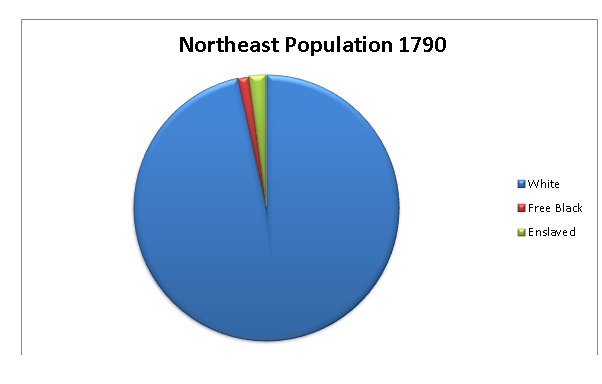
British North American colonists were better prepared for independence than their Latin American neighbors to the south because of literacy. In Latin America, ninety percent of the population was illiterate. In Literacy in New Spain by Joseph Esherick, Hasan Kayalı, and Eric Van Young, it is stated that, “The literacy rate in New Spain in 1810 could not have been much higher than 10 percent overall, with much of the literate population compressed spatially into the cities, and socially into the upper reaches of the social hierarchy, so that rural literacy must have been considerably lower.” The ten percent of people that were literate in Latin America were in the higher class who lived in the cities. Without literacy, people cannot contribute to their government because they do not understand it. People must be educated about a democratic republic, so that they know the regulations and how the system works. If Latin America became independent people would not know how to govern themselves. However, in the British colonies, more of the population was literate. As time went on, the number of people literate in these colonies increased. It is said in Literacy in the 13 Colonies/Early Republic by Jack Lynch, “Among white New England men, about 60 percent of the population was literate between 1650 and 1670, a figure that rose to 85 percent between 1758 and 1762, and to 90 percent between 1787 and 1795. In cities such as Boston, the rate had come close to 100 percent by century’s end.” Unlike in Latin America, the people who were literate had different jobs. In the colonies, the majority of the population was white. In Population in the US 1790, the pie charts show that the Northeast population was almost completely whites, with few enslaved and free blacks. The Southern population was about 2/3 white and almost 1/3 of the population was enslaved, with a minor percent of the population being free slaves. The reason why the British colonies were more literate than in Latin America was because whites made up most of the population. Whites were the ones who were educated in the British colonies. In the British colonies, people understood how their government functions because most people were literate. If they became independent, they would know exactly how to maintain the government.
http://comparativehistoryamericanrevs.weebly.com/uploads/3/0/0/9/3009385/7022367_orig.jpg
 

http://comparativehistoryamericanrevs.weebly.com/uploads/3/0/0/9/3009385/7022367_orig.jpg
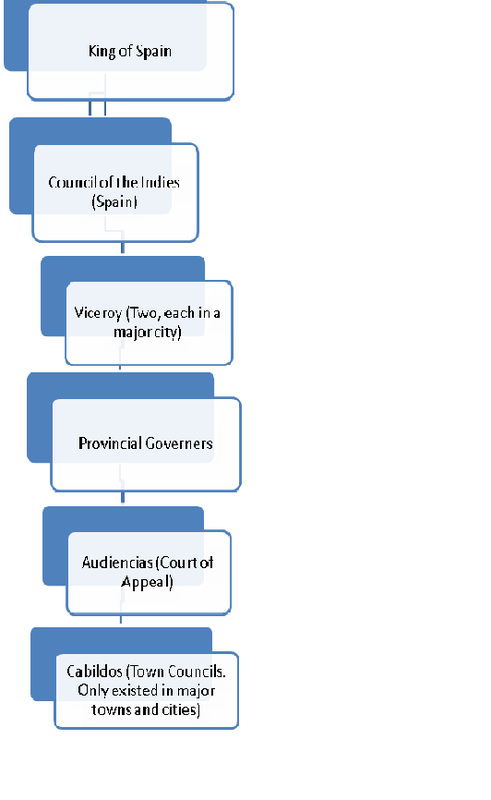
In addition to literacy, British North American colonists were better prepared for independence than their Latin American neighbors to the south because of political experience. In Latin America, the top two classes were located in Spain, not the colonies. Edward L. Ayers, Lewis L. Gould, David M. Oshinsky, and Jean R. Soderlund write in American Passages, “Directly below the monarch was the Council of the Indies, located in Spain and composed of men who knew little about the New World. The council regulated trade, appointed officials, made laws, and determined who should be allowed to emigrate.” These top two levels determined the laws of people living in the colonies from far away. There are many levels, but they were all controlled by people born in Spain. People living in the colonies had no say in their laws. In On Civil Law, it is said, “Monarchs appointed judges to act as agents strictly accountable to the monarch rather than local magnates; required judges to apply the written law rather than general principles to all cases no matter how dissimilar.” Judges in Latin America were only allowed to apply written laws. They were not able to pass laws that fit certain situations. People had to follow their monarchs and had no experience in self-governing in Latin America. The British colonies however, had fewer social classes, with the royal governor (the level underneath the king) living in the colonies. The colonies could self-govern. Edward Eggleston writes in A History of the United States and its People, ““The Charter of Massachusetts Bay of 1629, for example, declared that all who should settle in that colony should “have and enjoy all liberties and Immunities of free and naturall Subjects . . . to all Intents, [Constructions], and Purposes whatsoever, as [if] they and [everyone] of them were borne within the Realme of England.”[25]” Since the British colonies had experience with self-governing, they would be prepared to govern themselves if they were to gain independence.

 
http://comparativehistoryamericanrevs.weebly.com/uploads/3/0/0/9/3009385/7899709_orig.jpg
 
The British colonies had more literate citizens and more political experience than Latin America. These two factors caused British North American colonists to be better prepared for independence than their Latin American neighbors to the south.

Monday, October 21, 2013

Haitian Revolution


The new Republic of Haiti was received negatively by Thomas Jefferson. In “Ignoring the Revolution Next Door,” Edwidge Danticat states, ““Something is not done, and soon done, we shall be the murderers of our own children,” Jefferson wrote about the potential impact of the Haitian uprising.” He was upset that Haiti became an independent country with independent slaves. He encouraged slavery since it helped the economy. He did not support the new Republic of Haiti because he thought it was going to have a negative effect on the economy. It is ironic that during the Louisiana Purchase, which helped the United States gain land for slaves to grow cotton on, Haiti was becoming an independent country. Thomas Jefferson benefitted at the same time as Haiti benefitted, even though Jefferson did not agree with the new Republic of Haiti.

            Haiti was impacted by this reaction because of their lack of protection from other countries. Slaves gained their independence in Haiti, which Thomas Jefferson was upset about. Since Jefferson was against the new Republic of Haiti, Haiti did not get protection from the United States. This caused France to be able to attack Haiti after a four year period of peace in Haiti. In “France's Debt of Dishonour to Haiti,” Isabel macdonald explains, “Following Haiti's independence, former French slave-owners submitted detailed tabulations of their losses to the French government, with line items for each of "their" slaves that had been "lost" with Haitian independence. In 1825, the French King, Charles X, demanded that Haiti pay an "independence debt" to compensate former colonists for the slaves who had won their freedom in the Haitian Revolution. With warships stationed along the Haitian coast backing up the French demand, France insisted that Haiti pay its former coloniser 150m gold francs – ten times the fledgling black nation's total annual revenues.” French demanded Haiti to pay them for becoming independent. No country stood up for Haiti to tell France that this was wrong, since other countries followed Thomas Jefferson’s beliefs. From the global reception of the new Republic of Haiti, Haiti lost protection.


Monday, October 14, 2013

Napoleon Post


Napoleon impacted the social systems of Europe in a negative way for wealthy people. Shortly after overthrowing the Directory, Napoleon said to one of Madame de Stael’s friends, “It is necessary to do something new every three months, in order to captivate the imagination of the French nation, with whom anyone who stands still is lost.” Madame de Stael was part of the nobility, so with the social system change because of Napoleon, she would have no more luxury than all the other citizens. Madame de Stael says, “His system was to encroach (intrude) daily upon France’s liberty and Europe’s independence…By altering between cunning and force he has subjugate (conquered) Europe.” Madame de Stael was the daughter of one of King Louis XVI’s previous financial advisors, so she is at the top of society with great benefits. After Napoleon impacted the social system, high classes, including Madame de Stael, lose their luxurious advantages.  

Political systems in Europe were impacted in a positive way by Napoleon. The soldiers, officers, and sub-officers that Napoleon worked with were thrilled to work for him. Marshal Michel Ney said, “The times are gone the when people were governed by suppressing their rights. Liberty triumphs in the end, and Napoleon, our august Emperor, comes to confirm it.” Marshal Michel Ney was one of Napoleon’s soldiers. He worked by Napoleon’s side and was influenced by Napoleon’s wonderful strategies. Marshal Michel Ney was put in charge of the army and was made a hero by Napoleon. Soldiers who worked for Napoleon thought of Napoleon as a fantastic political leader. Napoleon came up with ideas in order to improve the political system with war techniques and helpful ways to rule. The political systems were improved in Europe from Napoleon’s amazing general skills.

Napoleon helped many Europeans in the economic system. People were fascinated by Napoleon’s ways of ruling, so they made a career out of exploring facts about napoleon. Thomas J. Vance explained in The Lost Voices of Napoleonic Historians, “This passage from Napoleon in Review (1939) is just one example of the lost voices of historians who spent much of their lives pouring over Napoleonic research, but whose books are now out-of-print and often inaccessible. The availability of books on Napoleon Bonaparte has never been a problem; however, many interesting works are becoming extinct.” These researches spent their time writing about Napoleon’s life and those researchers made a living off of selling those books. Those researchers can thank Napoleon for giving them a career. The economic system was improved by Napoleon.


http://www.google.com/url?sa=i&rct=j&q=&esrc=s&frm=1&source=images&cd=&cad=rja&docid=4c8xZIuwZjQ8LM&tbnid=wYJBW86QyqiF4M:&ved=0CAUQjRw&url=http%3A%2F%2Fwww.cardinalsolutions.biz%2Fblog%2Fbid%2F305415%2FInspirational-Leadership-Quote-Napoleon-Bonaparte&ei=TcRcUu2LKvG34AOUgIGAAw&bvm=bv.53899372,d.eWU&psig=AFQjCNETPzi0RoJxCSdF_NPSRx4qoKHXGw&ust=1381897669874150
 

Tuesday, October 8, 2013

United States and Great Britain Comparison


Industrialists were more likely to succeed in Great Britain. In the factories in Great Britain, the workers were paid less money, so the owners made more money. The owners did not have to give the workers the majority of their wages. The workers were paid less money because there was more labor available in Great Britain, most of which were previous farmers and their families. If someone quit their job at the factory, they could easily be replaced by another worker. In these factories, the workers were less likely to protest against the owners because they would be replaced right away. The factory owners did not have to worry about their workers’ feelings.  In “Observations of the Loss on the Woollen Spinning 1794,” the author writes, “In the eyes of the overseer she was but a brute, a slave, to be beaten, pinched and pushed about.” It is understood that the owners did not have to work hard in order to make sure that their workers were satisfied. The owners simply had to make sure that the workers were doing their jobs correctly, punish them if they were not, and pay them a small amount.

Workers had a more positive experience in the United States. For farmers, there was more land available. There were more land and job options for these workers if their small businesses were replaced by large companies. In “Early Factory Labor in New England 1883,” the author wrote, “Those of the mill­girls who had homes generally worked from eight to ten months in the year; the rest of the time was spent with parents or friends. A few taught school during the summer months. Their life in the factory was made pleasant to them. In those days there was no need of advocating the doctrine of the proper relation between employer and employed. Help was too valuable to be ill-treated....” The mills in the United States that textile workers worked in were cleaner and more sanitary than the mills in Great Britain. There were more breaks and fewer hours for workers in the United States than in Great Britain. In the United States, less labor was available, which meant that the factories were in need of their workers. Workers were able to protest for fair treatment, since the owners could not replace them.


Wednesday, October 2, 2013

Mary Paul Post


Mary Paul’s first letter to her father was written to convince him to allow her to go to Lowell in order to make money in a mill. She was optimistic and excited to pursue this new opportunity. In this letter she claimed, “I am in need of clothes which I cannot get if I stay about here and for that reason I want to go to Lowell or some other place.” Mary wanted to make money so that she could afford to buy goods, like clothing.  She believed that if she stayed on the farm that would not be possible. When Mary first started living working in the Lowell mill, she enjoyed her stay there. She wrote to her father in the second letter, “I think of staying here a year certain, if not more.” She wanted to stay at the mill because she loves receiving the payments and she adores the boarding house. She could not wait to tell her family about her new experience. However, in the third letter the tone was slightly different. She sounded more scared than before, like when she wrote, “Last Thursday one girl fell down and broke her neck which caused instant death.” She witnessed horror stories and chose to tell her father about them. This means she wanted him to know she was in a dangerous place. Mary explained that her health is downgrading from working so hard. In her fourth letter, Mary wrote to her father, “I stand it well, though they tell me that I am growing very poor.” She was doing a wonderful job in her work, but from working in the mill, she was becoming weak. Her letters were becoming more negative than they started out as. By her fifth letter, Mary admitted that the work was difficult and was negatively impacting her. She wrote, “I cannot tell how it is but never since I have worked in the mill have I been so very tired as I have for the last week but it may be owing to the long rest I have had for the last six months.” The work was exhausting and she was not able to get enough sleep. Mary’s experiences have become regretful and disappointing as the letters were written. Her experiment represents both the success and failure of the ‘Lowell Experiment.’  The girls who worked in the Lowell mill discovered the harsh conditions of labor there, which forced the girls to protest and demand for fair conditions. Nobody planned to work at the mill forever, so they would lose many of the workers eventually. However, it was a success for Mary because she learned that she liked the city more than the farm and that she did not want to go back to the farm and get married there. Also, this was successful to the mill owners because they paid the girls poorly and got a lot of work done. Young girls were easily lured into the mills since girls want to earn money in order to buy fancy items and it was an adventure to get out of the house and work in a city.

http://www.uml.edu/tsongas/bringing-history-home/page_02/sb3.htm

Monday, September 30, 2013

Karl Marx Communism PSA

Marx, Karl and Frederich Engels. The Communist Manifesto.  Modified from the Avalon Project.  1848. Yale University. http://avalon.law.yale.edu/subject_menus/mancont.asp(accessed September 28, 2013).
Karl Marx believed that everyone should be paid equally by working to the best of their ability. To inform people of these ideas, he wrote The Communist Manifesto, with the guidance of Frederich Engels. It explains Marx’s “revolutionary social change” ideas intended for German workers who were called the Communist League. Marx was raised as a Protestant in Treves by a father who dreamed of his son to study law. After doing so at the University of Bonn for one year, he transferred to the University of Berlin and studied philosophy, history and literature. These subjects helped Marx become an expert at discovering new ideas to improve society. Joining the group called the Young Hegals, who were influenced by the philosopher, Hegal, guided Marx to create the idea of communism. In addition to his educational background, Marx had many radical writings other than The Communist Manifesto, including an article in the Rheinische Zeitung, The Class Struggle in France, The Eighteenth Brumaire of Louis Napoleon, and A Contribution to the Critique Political Economy. He was known for expressing his ideas, even though they were different from most peoples’ thoughts in that time. He married Jenny von Westphalen, whose father was an important government official. Even though he was surrounded with people who are involved with the government, he still displayed his beliefs.  Marx grew up in poverty, so he was not part of the bourgeois.  However, he did not work in a factory; he spent most of his time writing. During that time, people were either extremely wealthy or in poverty in Europe. Proletarians, the working class, got paid little to nothing while spending long hours in harsh conditions, like cotton mills with almost no air or breaks. The bourgeois, property owners, were paid in high amounts. In the Communist Revolution, Marx desired for proletarians to standup to the bourgeois in order to protest for communism. From the manifesto, readers understand these wishes of Marx, although it is written only in the perspective of someone who grew up in poverty. Engels had money, but the writing piece of the manifesto came from Marx, and not Engels. Marx was a philosopher, not a mill worker. This document does not show the thoughts of the factory workers or the bourgeois. However, readers do know that Marx wanted all citizens to have the same wealth and the government should not be involved with the economy. As evidence of the unfair economy, Marx explained how the proletarian population was greater than the bourgeois population, yet the smaller population received higher wages.  Owners were paid more than workers by doing less labor than the workers. To display this evidence, Marx uses words like “spectre” and “Power” to describe communism. He compares the difference between the proletarian and the bourgeois class during capitalism with “freeman and slave, patrician and plebian, lord and serf, guild master and journeyman” to show the wide gap between the two.
 
***Dear Ms. Gallagher,
I know that all lines after the first should be indented. However, the blog would not allow me to format the PSA that way.

Sunday, September 22, 2013

Letter to Anne About Luddites


The Luddites were artisans that destroyed factories and machines during the Industrial Revolution. They believed in “Ned Ludd,” their mythical king. They protested by attacking machines while cross-dressed, in order to make their riots events that people would never forget. Luddites were against technology because people were mistreating it. Unfair jobs also caused them to protest because low wages were given to people working on the machines. In this letter a ten-year-old girl, who was forced to work in a factory during the Luddite riots, explains how she felt about the Luddites. She wrote the letter one year after beginning her working experience in the factory. Her father died two years before the letter was written and her mom must work at home in order to take care of her toddler.


My dearest cousin, Anne,

I am writing to you today to tell you about a group of people brave enough to stand up for what they believe in, known as the Luddites. They have been coming to factories and destroying machines. They are against the factories because the people that work in them, like me, do not get paid enough for all of the hard work that we do. The Luddites believe that people misuse technology, and I am on their side! I have even seen them dress up as women when they protest. That is something I will never forget. I must work in a factory because as you know, my dad has been gone for two years, so that is one income that we lost. At the factory, everyone I work with is my age or younger. Can you imagine working with kids that are all ten years old and younger? My mother cannot leave home, since she has to take care of Bobby. Bobby is almost three years old now! Mom does not have a job, so I have to provide money for the family to live, even though I do not make much. After long hours in the factory, I barely make enough money to get food for the three of us. The Luddites are right for protesting against that. Also, industrialism is hard on me because I am not able to spend time at home with mom and Bobby. An education is not on my daily agenda anymore either. The Luddites inspire me because they have the same feelings against industrialism as I do and they are willing to fight for their rights. I have decided that as soon I get a new job to support the family, I am going to join the Luddites and protest against industrialism. I will not be a part of smashing the machines because I do not agree with the violence part of the riots. That does not solve any problems. However, I will do all that I can to teach the community that industrialism is unfair.
Sincerely,
Jenna

Thursday, September 19, 2013

Exhibits of Curators


            The analysis process is an important part of curating because it helps the curator fully understand the topic of child labor and the sources that are used. It guides curators into what the viewers should get out of the exhibit. In order for viewers to understand the topic, the curator must be an expert in the topic, by analyzing each source used in the exhibit. This exhibit displays how child labor was popular during the Industrial Revolution. The picture of the young boys working a machine in the top left corner explains that even though these children were young and small, they were forced to operate dangerous machines. This picture was created in 1909,which was at the end of the Industrial revolution. Below that picture shows the dangerous working conditions of young children. It was made in 1854,during the Industrial Revolution. The picture underneath that states the fact that children were risking their lives to have a job during this time. They did intense work in risky mines.This source came from an English Factory Act hearing in 1819, which is the time that this child labor problem was present. The article in the middle at the bottom explains that delicate girls had to work in unfair conditions. It was written in 1794, which is when women were forced to make textiles on handlooms at home. This was written before the spinning jenny was invented. The chart in the middle at the top shows how the greatest percent of cotton factory workers in 1818-1819 was under the age of ten. At the same time, the number of people this age had the lowest percent. This source was written in Manchester in 1818, the time and place that this child labor was occurring. The article in the bottom right corner tells about the use of child labor decreasing in 1833. This act helps the problem, but does not completely end it. This article is the only positive source in the exhibit, so the background of it is brighter than all of the other sources. It was written in 1833, when the Factory Act was created. The title of the exhibit tells the viewer that this exhibit is about how the Industrial Revolution relied on child labor. Children were the main workers at this time and without them, all of the products would not have been manufactured. It grabs the viewer's attention by saying, "An Era Built on the Backs of Children," instead of plainly saying, "Child Labor in the Industrial Revolution." I hope the visitors will understand that during the Industrial Revolution, people were not only worked extremely hard under poor conditions with little pay, but that these workers were as young as under ten years old. The Industrial Revolution created fantastic products and ideas, however that is not worth the suffering of these children.
            While visiting the "Cotton and Slave Boom in the Industrial Revolution" exhibit, I learned that while the number of cotton textile mills were increasing, so were the number of slaves. A graph displayed that in 1834, there were twenty-two cotton mills and 2,300,000 slaves. After only twenty-four years, there were fifty-two textile mills and 3,953,696 slaves in a United States region. By visiting "Before and After the Industrial Revolution's Textile Industry" I now understand that before the spinning jenny was invented in the 1800s, women and girls had to spend time manufacturing textiles in there homes on handlooms. The spinning wheel made the work easier and faster, however the factories that these machines were in forced families to overwork with little pay. The "Transporting the Industrial Revolution" exhibit taught me that the steamship helped transport merchandise across canals when the amount of goods being made increased. The picture in the bottom left corner was in the exhibit and helped me understand how the steam engine operates. From visiting the "Industrial Revolution Brings Poverty and Pollution" exhibit, I have interpreted that people were in poverty when their living expenses increased, but their wages did not. The living conditions were crowded, polluted, and filthy. In this exhibit, it stuck out to me that a wealthy Scottish doctor and scholar claimed that the working-class had satisfying living conditions, while a French political thinker and historian stated that these conditions were horrifying.


Monday, September 16, 2013

Engel's Thoughts on the Industrial Revolution Workers


Engels, Friedrich. The Condition of the Working-Class in England in 1844. London:                    
             Swan Sonnenschein & Co., 1892.

Engles believed that the workers during the industrial revolution had terrible conditions. He wrote about the conditions to inform readers on how the working-class was being treated during this time. Friedrich Engels is a trustworthy source. In 1842, two years before he wrote this book, his parents sent him to Manchester in order to make thread with “Ermen and Engels’ Victorian Mill.” He observed the Old Town of Manchester at the time when the living and working conditions were awful. He helped his partner, Marx, write three books on what he had observed. He had no reputation of lying in his writing. Engels wrote this entry at the end of his life, three years before he died. He was reflecting on what he remembers from this time. This document teaches the reader that Friedrich Engels, a philosopher, political theorist, social scientist, and author, thought that the working-class had poor conditions. It was written 48 years after Engels experienced this, so there is not much detail. It is from the perspective of an observing author, not the actual workers. Engels states that the quarters were filthy in the Old Town of Manchester. Also, the shelters that the workers lived in were small and chaotic. Engels believed that the workers were treated unfairly in the industrial revolution.